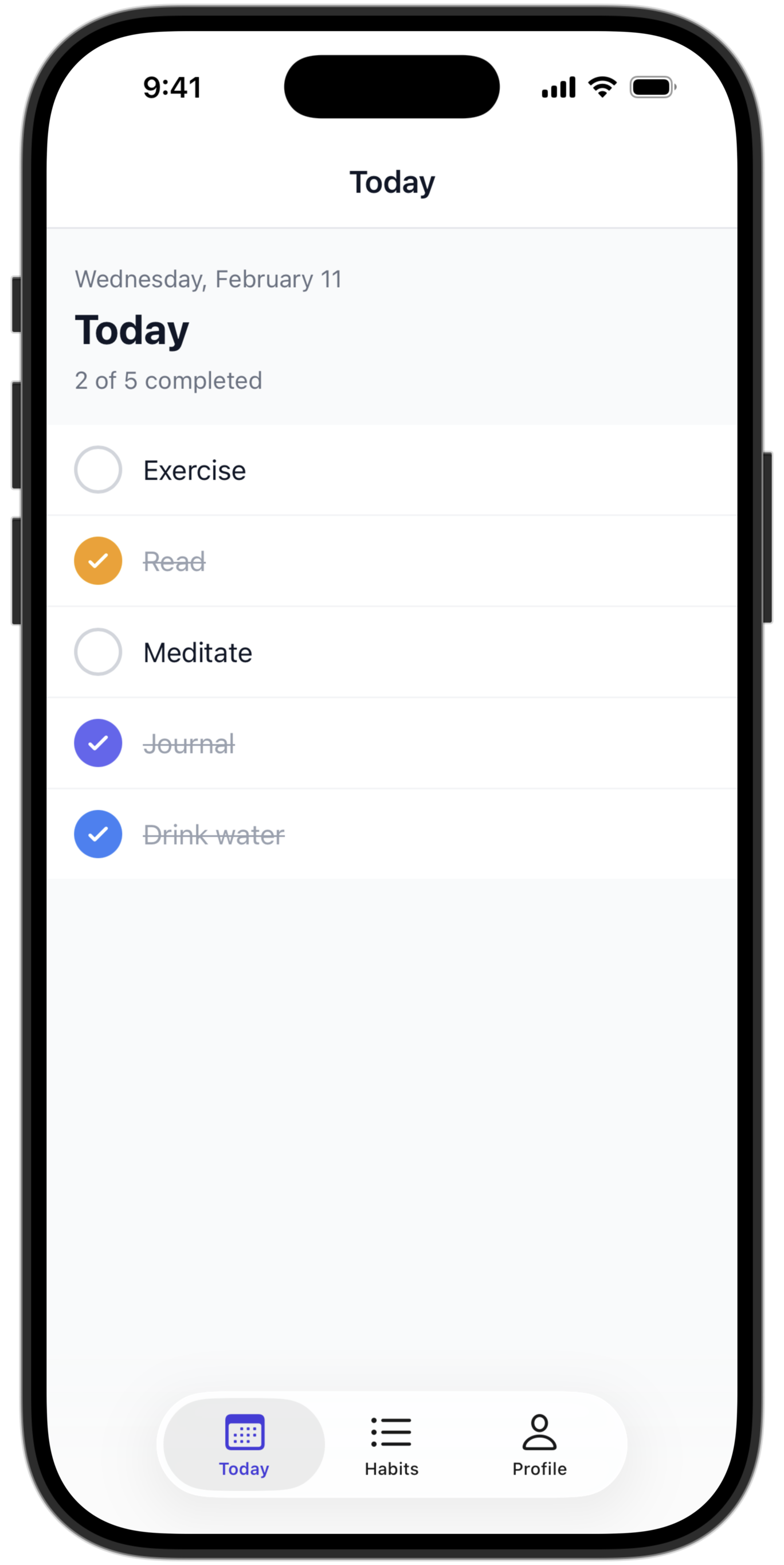
No Xcode. No Android Studio. No native code.

Your Rails app, in the App Store.
With just Ruby and YAML.

Ruby Native turns your existing Rails app into a native iOS and Android app. Configure with YAML, preview on your phone, and ship to the stores. Works with any Rails frontend.

Works with any Rails app

config/native_rails.yml

# config/native_rails.yml

app:

  name: "Bookmarks"

  icon: "app/assets/images/icon.png"

appearance:

  tint_color: "#3B82F6"

navigation:

  style: tabs

  tabs:

    - title: "Links"

      path: "/links"

      icon: "link"

    - title: "Tags"

      path: "/tags"

      icon: "tag"

    - title: "Demo"

      path: "/demo"

      icon: "flask"
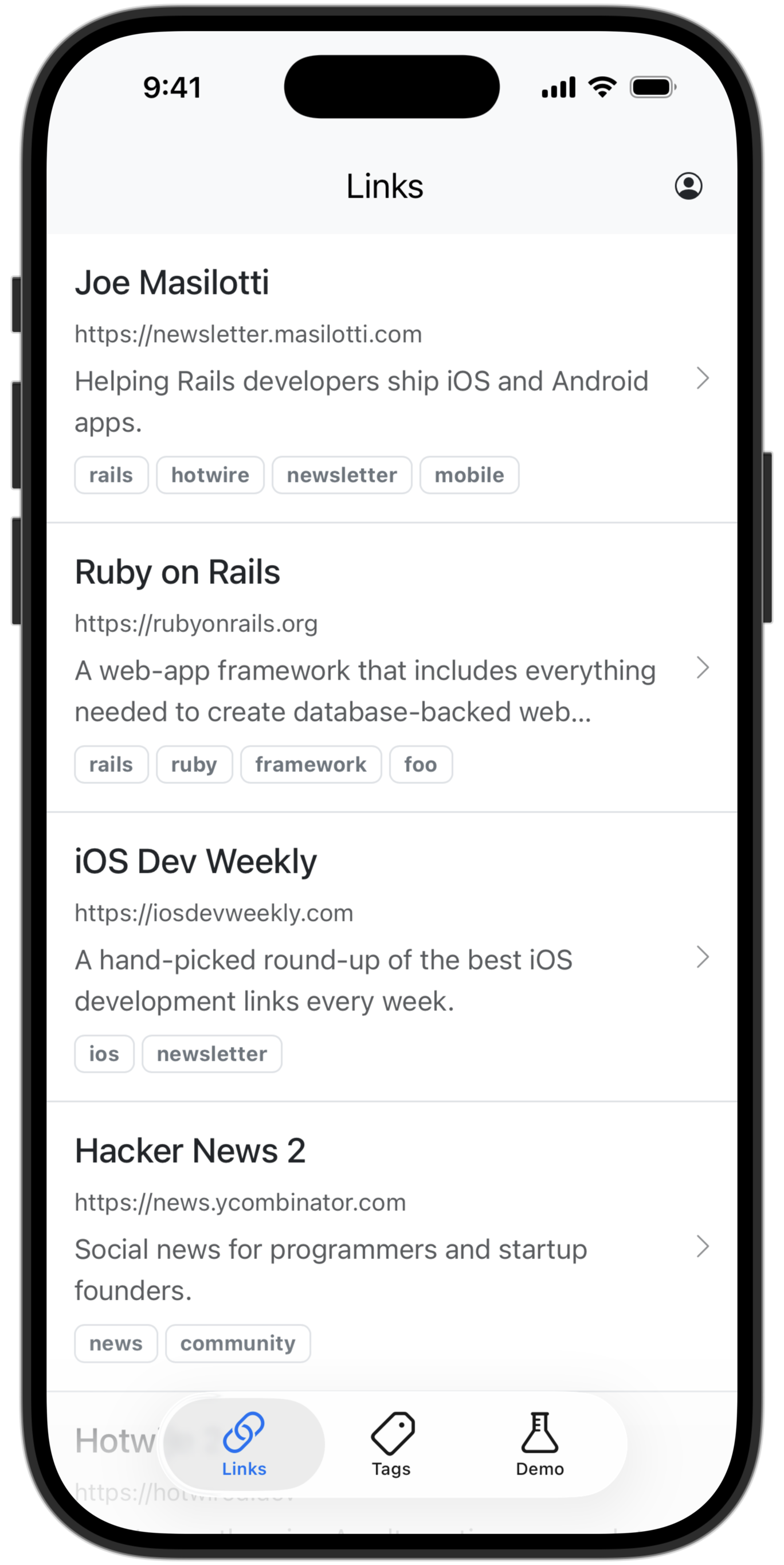
Hotwire app built with Ruby Native

Everything you need

From YAML config to the App Store.

Ruby Native handles the hard parts of mobile app development so you can focus on your Rails app. No Swift, no Kotlin, no Xcode.

YAML configuration

Define your app name, colors, tab bar, and navigation in a single YAML file. Change a value, hit refresh, see the update on your phone.

Instant QR preview

Run native_rails preview and scan a QR code. See your app running on your phone in under a minute.

Any Rails frontend

Works with Hotwire, React, Vue, Stimulus, or plain ERB. Ruby Native wraps your existing web app in a native shell.

Native tab bar

A real native tab bar using first party APIs. Defined in YAML, rendered by iOS and Android. Feels like a native app because it is one.

Cloud builds

Submit to the App Store and Play Store without installing Xcode or Android Studio. We handle code signing, builds, and store submission.

Rails view helpers

Use native_app? in your views to show or hide content for mobile app users. One codebase, three experiences.

From a developer teams trust

25+ apps shipped. Here's what they say.

"Joe has been instrumental in building the Hotwire Native libraries with the team at 37signals."

Jay Ohms

Mobile Team Lead, 37signals

"Joe's expertise and collaborative spirit makes him a standout partner. He seamlessly helped us build native apps the Rails way."

Doyle Baxter

CTO

"Joe brought thoughtful documentation, quick turnaround on issues, and a calm confidence that made the whole process feel smooth."

Franco Marcano

Head of Engineering, Strety

Simple pricing

Ship to the app stores without native code.

Preview your app for free. Pay when you're ready to ship.

Pro

$99 /month per app

Everything you need to ship to the App Store and Play Store.

  • Cloud builds for iOS and Android

  • Code signing and store submission

  • Push notifications

Business

$399 /month per app

For teams that want hands-on help getting in the app stores.

  • Everything in Pro

  • App Store review assistance

  • Concierge onboarding

  • Priority support

Frequently asked questions

Can't find what you're looking for? Send me an email and I'll get back to you.

How is this different from a PWA?

PWAs don't get a real presence in the App Store or Play Store. Ruby Native gives you a real native app with a native tab bar, push notifications, and an actual store listing. Users find you in the store, not via a browser prompt.

How is this different from Capacitor?

Capacitor requires you to maintain a full Xcode and Android Studio project. Ruby Native is config-driven. You never open an IDE, never write Swift or Kotlin, and never manage native dependencies. Just YAML and Ruby.

How is this different from Hotwire Native?

Hotwire Native gives you more control but requires writing Swift and Kotlin code. Ruby Native is for teams who want to be in the App Store without touching native code.

Does it work with my existing Rails app?

Yes. Ruby Native works with any Rails app regardless of frontend framework. Hotwire, React, Vue, Stimulus, or plain ERB. Add the gem, run the generator, and you're up and running.

Do I need a Mac to build the iOS app?

No. Cloud builds handle everything. You push your config, we compile the app, sign it, and submit it to the store. All from your Rails project, on any operating system.

What if I need more native features later?

Ruby Native is designed as the first step. If you outgrow YAML configuration, you can graduate to Hotwire Native for deeper native integration, or go fully native. Your Rails backend stays the same either way.

Ready to ship your Rails app to the App Store?

Add the gem, configure with YAML, and preview on your phone. No native code, no Xcode, no hassle.